Filters

Partnering
The Partnering workshop is offered as a co-teaching activity.
It creates a space for experimentation around the relationship and articulation with the 'other' as partner. The work is informed by references to contemporary choreographic and performance pieces.
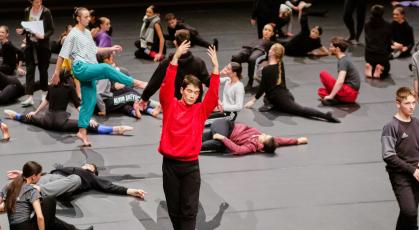
Contemporary dance - DCI
The contemporary dance courses in the classical curriculum cover different approaches to technical work in order to prepare students to become performers available to meet the demands of the constantly changing choreographic landscape and to prepare them for a form of virtuoso versatility. These courses are supported by a teaching team that offers a wide range of teaching options.

Support
Alongside technical mastery, linked to sight-reading alone or with partners, transposition, continuo, choral and orchestral reduction, this teaching aims to acquire the fundamentals of the vocal and instrumental repertoire. Working closely with instrumentalists and singers, pianists are able to consolidate their skills through practical experience, with the emphasis on integration into professional life.

Sight-reading piano B
At the crossroads between music training, chamber music, instrumental and orchestral classes, the sight-reading class gives instrumentalists the essential solfeggio, musical and instrumental reflexes they need when faced with a new score. Once they have grasped the musical theme, they are in a position to give their own interpretation. This apprenticeship also forms the basis of collective playing, through ensemble sight-reading, which requires attentive listening to one's partners. Whether individual or collective, the course emphasises the concepts that are essential to all instrumental playing: intonation, rhythmic precision, nuances, flexibility of tone and the ability to construct a coherent musical phrase from reading.

Sight-reading piano A
At the crossroads between music training, chamber music, instrumental and orchestral classes, the sight-reading class gives instrumentalists the essential solfeggio, musical and instrumental reflexes they need when faced with a new score. Once they have grasped the musical theme, they are in a position to give their own interpretation. This apprenticeship also forms the basis of collective playing, through ensemble sight-reading, which requires attentive listening to one's partners. Whether individual or collective, the course emphasises the concepts that are essential to all instrumental playing: intonation, rhythmic precision, nuances, flexibility of tone and the ability to construct a coherent musical phrase from reading.