Filters

Organ improvisation
This class offers a specific approach to improvisation for organists, in line with the French tradition of organ improvisation. Drawing on a wide range of experiences - collective improvisation, free improvisation, improvisation on a theme, improvisation based on given elements, or improvisation in relation to silent films, theatre, dance, circus, electronics, etc. - instrumentalists acquire a freedom of play and a capacity for invention in a wide range of styles. Rhythmic, harmonic and melodic forms and languages of the past are studied and practised in depth. At the same time, cross-disciplinary projects and public sessions with guest artists provide the class with an eminently contemporary approach, echoing a wide variety of aesthetics and expressions.

Organ improvisation (DCI)
This class offers a specific approach to improvisation for organists, in line with the French tradition of organ improvisation. Drawing on a wide range of experiences - collective improvisation, free improvisation, improvisation on a theme, improvisation based on given elements, or improvisation in relation to silent films, theatre, dance, circus, electronics, etc. - instrumentalists acquire a freedom of play and a capacity for invention in a wide range of styles. Rhythmic, harmonic and melodic forms and languages of the past are studied and practised in depth. At the same time, cross-disciplinary projects and public sessions with guest artists provide the class with an eminently contemporary approach, echoing a wide variety of aesthetics and expressions.
Improvisation / interpretation / composition
The improvisation/interpretation/composition workshop is a place for guided research where students explore, invent, refine their awareness and the accuracy of their gestures in order to be as close as possible to their expressive intentions and interpretive desires. Improvisation and composition are also times for learning how to look at others, read, identify, name and glimpse the diversity of approaches. In improvisation, whether individual or collective, targeted instructions open up a range of possibilities so that everyone can find their own understanding and imagination. The composition develops a form of writing to make this material legible and sensitive. There are a variety of approaches to composition: a more 'instinctive' structure, manipulation of certain compositional parameters, use of randomness, structures borrowed from other disciplines.
Contact dance / improvisation
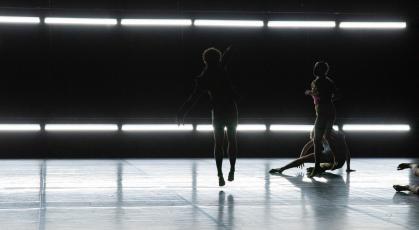
Initiated in 1972 by Steve Paxton, Contact Improvisation is an experimental dance form that plays with the laws of physics, through gravity and expansion, balance and decentring, inertia and impulse, and the modification of the forces involved. Sometimes acrobatic, sometimes delicate and slow, borrowing from the martial arts as much as from meditation and somatic practices, Contact Improvisation has many uses.