
Filters

Mastering
By carrying out personal projects in a professional studio, this course teaches the skills associated with the technical adaptation of music recordings to broadcast networks. By the end of the course, students will have acquired solid expertise in the use of specialised technology. They will develop an expert ear, and acquire the techniques and methods needed to tackle the final stage of a project with confidence.

Jazz dance
Drawing on a wide range of techniques, jazz dance allows great freedom of movement. It's a sequence of dynamics, abandoned to a state of impulse, and a rhythmic structuring that transforms a familiar technical vocabulary into new sensations.

Yoga Dancers
The yoga class consists of a series of postures, the asanas, with dynamic stretching, and awakens awareness of the body in space and of the space we can create in our own bodies.
Attention, concentration and involvement are developed and supported by calm, slow and precise breathing work.
Intentional placement, alignment and amplitude reveal sensations that are refined over time.
Depending on the time of year, this dynamic practice is supplemented or replaced by a more restorative or yin yoga practice, as well as by time devoted to meditation, essential tools for tackling exams, competitions and auditions, and for getting to grips with the stress that every dancer can encounter on their journey through the studio and on stage.
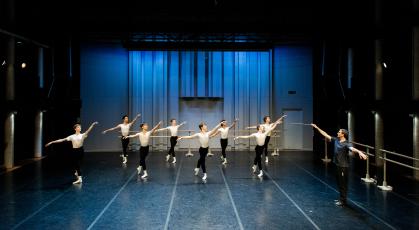
Classical dance - DCI
Classical dance is approached at the Conservatoire, as part of the contemporary curriculum, as one of the fundamental techniques, a common thread that will run through each year. The aim is not for students to master all the technical and artistic aspects covered in depth in the classical curriculum, but to learn, practise and grasp a vocabulary and a grammar that they will be called upon to use in their professional careers, in auditions and in certain contemporary works.
Sight-reading wood
At the crossroads between music training, chamber music, instrumental and orchestral classes, the sight-reading class gives instrumentalists the essential solfeggio, musical and instrumental reflexes they need when faced with a new score. Once they have grasped the musical theme, they are in a position to give their own interpretation. This apprenticeship also forms the basis of collective playing, through ensemble sight-reading, which requires careful listening to one's partners. Whether individual or collective, the course emphasises the concepts that are essential to all instrumental playing: intonation, rhythmic precision, nuances, flexibility of tone and the ability to construct a coherent musical phrase from reading.