Filters



Music analysis A
This course is designed for instrumentalists. It aims to understand works in a variety of styles, periods and genres, to put one's artistic practice into perspective and forge one's own unique interpretation. As well as acquiring theoretical knowledge and analysing works, students are introduced to the main analytical methodologies specific to the repertoire studied.
Art projects
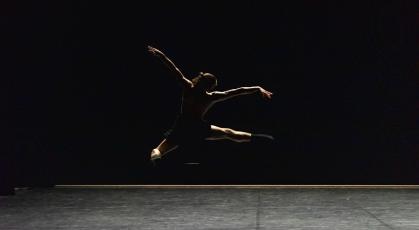
Artistic projects are productions designed to put students in a professional situation within the Ensemble chorégraphique. Like a professional company, made up of students from first cycles of national and international higher education, the Ensemble Chorégraphique creates the conditions for professional exposure: exploring repertoires, discovering the creative process with renowned choreographers, practising on stage and experiencing life on tour with all the adaptability skills required... So many opportunities to be nourished by a variety of aesthetics, while cultivating their singularity.
As part of these artistic projects, each year the choreographic ensemble performs a wide range of works from the neoclassical and contemporary repertoires. Creations are also commissioned from some of the most contemporary and demanding choreographers, and performed each year at the Conservatoire de Paris, then on tour in France and abroad.
Some examples of choreographers in the Ensemble Chorégraphique repertoire: Dominique Bagouet, Cécilia Bengolea, Trisha Brown, François Chaignaud, Boris Charmatz, Merce Cunningham, Marco da Silva Ferreira, Andy Degroat, William Forsythe, Emanuel Gat, Pierre Godard, Jiri Kylian, Maud Le Pladec, Wayne Mc Greggor, Benjamin Millepied, Julian Nicosia, Liz Santoro, Jacopo Godani, Mathilde Monnier...
Women's classical dance
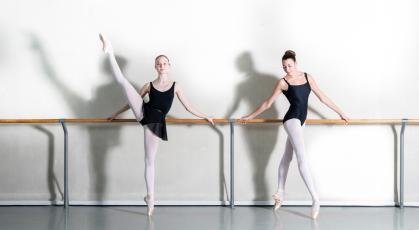
The classical dance taught at the Conservatoire is inherited from the French dance practised in Western Europe since the 17th century, whose founding technical and aesthetic principles are en-dehors and aplomb, a spirit of rigour and a concern for elegance and clarity. From the 19th century onwards, the specificity of women's ballet lay in the pointe technique.
A living art form, classical dance is constantly being enriched, and although it has evolved over nearly four centuries, it still retains elements of its origins. The vocabulary used to describe and name movement has been extended throughout the world, proving that it remains a benchmark aesthetic that transcends fashions and borders.